UPDATE: UCSD Philosophy Department Chair Craig Callender has authored the following memorial notice:
Professor Avrum Stroll (1921-2013)
The Department of Philosophy is sad to announce the loss of one of its founding
members, Emeritus Research Professor Avrum Stroll, who died on September 12, 2013
in La Jolla. Professor Stroll was a beloved colleague, teacher, administrator and
researcherfor half a century. He will be sorely missed.
Born in 1921, Avrum received his Ph.D. from UC, Berkeley. With Richard Popkin and
Jason Saunders, he founded the Department of Philosophy in 1963, chairing it in 1966-
7 and 1969-72. In 1964 he organized a conference that brought Herbert Marcuse to
UCSD for a campus-wide lecture, which led to the hiring of Marcuse that same year.
Throughout his time here he was instrumental in shaping the Department into an
internationally recognized leader in various fields. He also served UCSD more
generally, acting as Faculty Assistant to the Vice Chancellor for Academic Affairs,
among other positions.
Professor Stroll was an expert in philosophy of language, epistemology, and
metaphysics. He was also instrumental in establishing the history of 20th century
analytic philosophy as a field. For much of his career, Stroll expanded upon and
adapted the methods of Ludwig Wittgenstein and J. L. Austin to deal with a broad
array of topics, including explaining the conditions under which people can be certain
and justified. His warm enthusiasm for Wittgenstein was as genuine and infectious as
were his battles with the epistemological skeptic. His philosophical method involved
careful and insightful attention to individual situations, “the method of cases,” – what
his former student Professor Al Martinich describes as “the philosophical analog of
Marcel Proust’s descriptions of things and events.” Professor Stroll’s publishing career
spanned over fifty years. Throughout he was an extremely prolific philosopher,
authoring or co-authoring twenty books and approximately one hundred and fifty
articles.
Personally, Professor Stroll lived life to the fullest. Passionate about opera, golf, good
food and wine, he enjoyed lively conversation about politics, sports and language. His
friends and colleagues will miss his delightful cackle, his sharpness of thought but also his kindness.
No discussion of Professor Stroll can omit his boundless energy for philosophy.
Retirement only increased his ability to engage in the subject. Fittingly, in 1995-1996
Stroll was awarded the Constantine Panunzio Distinguished Emeriti Award by the
University of California. Upon his retirement from full time teaching, he was
appointed a research professor, and continued to co-teach a seminar with the
distinguished biologist, S. J. Singer, and publish. Throughout his life he was dedicated
to sharing his passion for the field. His four introductory books with Popkin helped
shape the teaching canon in the field. Their first book, Philosophy Made Simple
(Doubleday) is still in print, more than five decades and a million copies after its 1956
publication. We in the Department are heartened by the fact that this vigorous
champion of philosophy will still be attracting students to the field after his passing.
He is survived by his wife, Mary Stroll, a medieval historian, four children, Robin
Stroll, Susie Stroll, Noelle Melese, Ted Stroll, son in law Patrick Melese, and grandson
Andrew Melese.
We plan to remember and celebrate Professor Stroll in the Atkinson Pavilion at the
UCSD Faculty Club between 4-6pm on October 26, 2013. If you plan to attend, please
RSVP to Susanne Degher at sdegher@ucsd.edu.
[My original post appears below:]
UCSD Emeritus Research Professor Avrum Stroll,
founder of the UCSD Philosophy Department in 1963 (along with Richard Popkin and Jason Saunders) died on September 12, 2013.
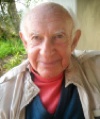
Avrum was Chair of the Department in 1966-1967 and 1969-1972.
In an earlier post, I wrote of the early years, including his organizing of a conference in 1964 which brought Herbert Marcuse to UCSD for a campus-wide lecture, which led to the hiring of Marcuse that same year.
Avrum was an extremely prolific philosopher, whose publishing career spanned over fifty years. He was an expert on analytical philosophy, philosophy of language, and the history of twentieth-century philosophy. He was also the co-author (with Richard Popkin) of
four introductory philosophy textbooks, including one of the most widely-read introductions in North America (
Philosophy Made Simple).
Select Bibliography:
Popkin, R. and A. Stroll, Philosophy Made Simple (Garden City, NY: Doubleday & Company, 1956).
_Introduction to Philosophy (New York: Holt, Rinehart and Winston, 1961).
_Introductory Readings in Philosophy (New York: Holt, Rinehart and Winston, 1972).
_Skeptical Philosophy for Everyone (Prometheus Books, 2002).
Stroll, A. 'On the first flowering of Frege's reputation', Journal of the History of Philosophy 4 (1966).
_Epistemology: new essays in the theory of knowledge (New York, 1967).
_'Censorship, models, and self-government', Journal of Value Inquiry 1 (1967).
_Moore and Wittgenstein on Certainty (Oxford UP, 1994).
_Surfaces (Minneapolis, Minnesota UP 1998).
_Sketches of Landscapes: philosophy by example (Cambridge, MA, 1998).
_'Proper names, names, and fictive objects', The Journal of Philosophy (1998).
_Twentieth Century Analytic Philosophy (New York, Columbia UP, 2001).
_Informal Philosophy (Lanham, MD, 2009).
Links to some of Avrum's papers are available at
philpapers.


