Showing posts with label Avrum Stroll. Show all posts

Sunday, September 15, 2013

Avrum Stroll (1921-2013)

UPDATE: UCSD Philosophy Department Chair Craig Callender has authored the following memorial notice:

Professor Avrum Stroll (1921-2013)

The Department of Philosophy is sad to announce the loss of one of its founding
members, Emeritus Research Professor Avrum Stroll, who died on September 12, 2013
in La Jolla. Professor Stroll was a beloved colleague, teacher, administrator and
researcherfor half a century. He will be sorely missed.

Born in 1921, Avrum received his Ph.D. from UC, Berkeley. With Richard Popkin and
Jason Saunders, he founded the Department of Philosophy in 1963, chairing it in 1966-
7 and 1969-72. In 1964 he organized a conference that brought Herbert Marcuse to
UCSD for a campus-wide lecture, which led to the hiring of Marcuse that same year.
Throughout his time here he was instrumental in shaping the Department into an
internationally recognized leader in various fields. He also served UCSD more
generally, acting as Faculty Assistant to the Vice Chancellor for Academic Affairs,
among other positions.

Professor Stroll was an expert in philosophy of language, epistemology, and
metaphysics. He was also instrumental in establishing the history of 20th century
analytic philosophy as a field. For much of his career, Stroll expanded upon and
adapted the methods of Ludwig Wittgenstein and J. L. Austin to deal with a broad
array of topics, including explaining the conditions under which people can be certain
and justified. His warm enthusiasm for Wittgenstein was as genuine and infectious as
were his battles with the epistemological skeptic. His philosophical method involved
careful and insightful attention to individual situations, “the method of cases,” – what
his former student Professor Al Martinich describes as “the philosophical analog of
Marcel Proust’s descriptions of things and events.” Professor Stroll’s publishing career
spanned over fifty years. Throughout he was an extremely prolific philosopher,
authoring or co-authoring twenty books and approximately one hundred and fifty
articles.

Personally, Professor Stroll lived life to the fullest. Passionate about opera, golf, good
food and wine, he enjoyed lively conversation about politics, sports and language. His
friends and colleagues will miss his delightful cackle, his sharpness of thought but also his kindness.
No discussion of Professor Stroll can omit his boundless energy for philosophy.
Retirement only increased his ability to engage in the subject. Fittingly, in 1995-1996
Stroll was awarded the Constantine Panunzio Distinguished Emeriti Award by the
University of California. Upon his retirement from full time teaching, he was
appointed a research professor, and continued to co-teach a seminar with the
distinguished biologist, S. J. Singer, and publish. Throughout his life he was dedicated
to sharing his passion for the field. His four introductory books with Popkin helped
shape the teaching canon in the field. Their first book, Philosophy Made Simple
(Doubleday) is still in print, more than five decades and a million copies after its 1956
publication. We in the Department are heartened by the fact that this vigorous
champion of philosophy will still be attracting students to the field after his passing.
He is survived by his wife, Mary Stroll, a medieval historian, four children, Robin
Stroll, Susie Stroll, Noelle Melese, Ted Stroll, son in law Patrick Melese, and grandson
Andrew Melese.

We plan to remember and celebrate Professor Stroll in the Atkinson Pavilion at the
UCSD Faculty Club between 4-6pm on October 26, 2013. If you plan to attend, please
RSVP to Susanne Degher at sdegher@ucsd.edu.

[My original post appears below:]

UCSD Emeritus Research Professor Avrum Stroll, founder of the UCSD Philosophy Department in 1963 (along with Richard Popkin and Jason Saunders) died on September 12, 2013.
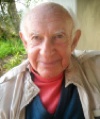
Avrum was Chair of the Department in 1966-1967 and 1969-1972. In an earlier post, I wrote of the early years, including his organizing of a conference in 1964 which brought Herbert Marcuse to UCSD for a campus-wide lecture, which led to the hiring of Marcuse that same year.

Avrum was an extremely prolific philosopher, whose publishing career spanned over fifty years. He was an expert on analytical philosophy, philosophy of language, and the history of twentieth-century philosophy. He was also the co-author (with Richard Popkin) of four introductory philosophy textbooks, including one of the most widely-read introductions in North America (Philosophy Made Simple).

Select Bibliography:

Popkin, R. and A. Stroll, Philosophy Made Simple (Garden City, NY: Doubleday & Company, 1956).
_Introduction to Philosophy (New York: Holt, Rinehart and Winston, 1961).
_Introductory Readings in Philosophy (New York: Holt, Rinehart and Winston, 1972).
_Skeptical Philosophy for Everyone (Prometheus Books, 2002).

Stroll, A. 'On the first flowering of Frege's reputation', Journal of the History of Philosophy 4 (1966).
_Epistemology: new essays in the theory of knowledge (New York, 1967).
_'Censorship, models, and self-government', Journal of Value Inquiry 1 (1967).
_Moore and Wittgenstein on Certainty (Oxford UP, 1994).
_Surfaces (Minneapolis, Minnesota UP 1998).
_Sketches of Landscapes: philosophy by example (Cambridge, MA, 1998).
_'Proper names, names, and fictive objects', The Journal of Philosophy (1998).
_Twentieth Century Analytic Philosophy (New York, Columbia UP, 2001).
_Informal Philosophy (Lanham, MD, 2009).

Links to some of Avrum's papers are available at philpapers.

Monday, March 14, 2011

From Historical to Eliminative Materialism (via German Idealism), part 2: the 1970s


Please help me improve this essay with corrections, comments, or suggestions.

The 1970s

Although Paul Henry and Richard Popkin had left the Department by 1973, UCSD Philosophy continued to build on its strengths throughout the decade of the 1970s, adding several faculty members who remain among its most active and important.
In the history of philosophy, Georgios H. Anagnostopoulos had been hired as an Assistant Professor in 1969. His research focuses on Aristotle. Georgios chaired the department from 1983-1987 (and again from 1999-2001 before becoming Acting dean of the Division of Arts and Humanities in 2001-2002). In 1974 Professor Henry E. Allison, a major scholar of modern philosophy and extremely able replacement for Richard Popkin, was hired. Henry was later named Research Professor 1995 and is currently Emeritus (as of 1997). Henry chaired the department immediately before Georgios from 1979-1983. Rapidly adding to its strength in German idealism, the department hired as Assistant Professors Robert B. Pippin in 1975, and S. Nicholas Jolley in 1978. In 1976 UCSD added Professor Edward N. Lee to its roster of Greek philosophers, and he remains Emeritus Professor (as of 1995).
These five recruitments in the history of philosophy continued the strong tradition in history of philosophy that Popkin had established, and three other hires during the decade also strengthened its position in social and political philosophy, adding to the already formidable presence in the department of Herbert Marcuse and Stanley Moore.
In 1971, UCSD recruited away from Harvard’s School of Education Professor Frederick A. Olafson in 1971. Olafson soon became Chair of the Department from 1973-1977; he remains Emeritus Professor (as of 1992). The department made two further hires of Assistant Professors who remain active on the faculty today as full Professors: Richard J. Arneson joined the faculty in 1973, and Gerald. D. Doppelt in 1975.
In the area of philosophy of language, linguistics, metaphysics, and epistemology, an area in which Avrum Stroll had established a name for UCSD, the department hired Professor Zeno Vendler in 1975 (Emeritus, 1988). Vendler had been a founder of the Philosophy Department at the University of Calgary. Avrum Stroll and Fred Olafson wrote an interesting remembrance of him that was published in the Proceedings and Addresses of the American Philosophical Association.
Avrum Stroll and Richard Popkin, having already written together two best-selling introductory philosophy textbooks (Philosophy Made Simple, New York, 1954; Introduction to Philosophy, New York, 1961), revised the Introduction to Philosophy into a second edition (New York, 1972), and also produced a companion volume, Introductory Readings in Philosophy (New York, 1972). Although Stroll and Popkin went on to produce two other introductory philosophy textbooks (!), the two published in 1972 are of particular interest because of what they show about the UCSD undergraduate philosophy curriculum in the 1960s and 1970s. The curriculum is grounded in the reading of extended passages from primary sources from the history of philosophy (Plato, Aristotle, Aquinas, Descartes, Locke, Leibniz, Berkeley, Spinoza, and Hume). This tradition of introducing students to philosophy through the reading of primary sources in the history of philosophy continues in the department to this day. For contemporary philosophy, the introductory students in the 1970s read J. L. Austin. In political philosophy, they were made to read Herbert Marcuse’s most influential piece of writing, the essay “Repressive Tolerance”, reprinted in Introductory Readings in Philosophy in its entirety. In the Introduction to Philosophy, Stroll and Popkin both explain and criticize Marcuse’s political philosophy. This shows an extraordinarily high level of collegiality, collaboration, and mutual criticism in the department. One can only hope that the UCSD Philosophy department remains as vibrant today.

Sunday, March 13, 2011

From Historical to Eliminative Materialism (via German Idealism), part 1: the 1960s

Below is a draft of the first section of the brief overview of the history of the UCSD Philosophy Department that I have been assigned to write. Please help me to improve it by offering corrections, comments, or suggestions.


The 1960s

As Nancy Scott Anderson has documented in her An Improbable Venture: a history of the University of California, San Diego (La Jolla, 1993) UCSD was planned from the beginning and top-down to be an instantly excellent University, and it is widely recognized that it has in fact become the best university established in the country since the end of World War II; among the best public universities in the country, if not the best; and one of the greatest scientific research institutions in the world. The origin and subsequent evolution of the Department of Philosophy has to be understood, of course, against this institutional backdrop.
The Philosophy Department at UCSD was founded on July 1, 1963. The first graduate and undergraduate courses were offered in Academic year 1963-1964, making Philosophy the first functioning non-science graduate program at UCSD. The first Ph.D. degree was awarded in 1965 to David Fate Norton. David was also the first Assistant Professor hired by the department, and the first Professor to earn tenure in the department (1970). In 1972, David went on to a Professorship at McGill University and has contributed greatly to the study of David Hume.
Richard Popkin was recruited as the first Chair in 1963. He had already published in 1960 his major work History of Skepticism, which he continued to revise and expand throughout his career at UCSD. It remains an authoritative work on the influence of ancient skepticism on the subsequent history of western philosophy. Simultaneously with the founding of the department in 1963, he established the Journal of the History of Philosophy (recently ranked as the best general journal in the history of philosophy by readers of Brian Leiter’s blog). Popkin also founded the book series International Archives of the History of Ideas, which has now published over 200 monographs.
The other founding Professors, recruited by Popkin in 1963, were Jason L. Saunders, a specialist in ancient philosophy, and Avrum Stroll, a contemporary metaphysician, epistemologist, and philosopher of language, who remains Research Professor Emeritus at UCSD. Avrum gave the first non-science faculty lecture at UCSD in 1964, and he organized what turned out to be a momentous seminar on contemporary Marxism for the scientists in 1964, with Stanley Moore and Herbert Marcuse invited as speakers. As a result of the success of this conference, UCSD hired both Moore and Marcuse the next year.
Stanley Moore, in a low point for academic freedom in the USA, had been fired from Reed College in 1954 after refusing to answer questions about his membership in the Communist Party before McCarthy’s House Un-American Activities Committee. He was recruited as a senior lecturer at UCSD in 1965 and made a full Professor of Philosophy in 1967. During his time at UCSD, he produced several important books and dozens of articles on Marxism and social-political philosophy. He was affiliated with the department until he died in 1997, and a thoughtful and interesting remembrance of him has been written by Avrum Stroll, Fred Olafson, Dick Arneson and Georgios Anagnostopoulos.
Marcuse was a philosopher and political activist associated with the Frankfurt School of Critical Theory, celebrated for his activities while he was a philosophy Professor at UCSD (1964-1979) as “the father of the New Left”. Interest in and research into Marcuse’s philosophy is flourishing: Routledge has recently published 5 volumes of translations of previously unpublished material. Like Moore two decades earlier at Reed, Marcuse became the subject of enormous controversy while he was a Philosophy Professor at UCSD. A death threat was sent to Marcuse at the Department in 1967, but he courageously vowed to continue living and teaching in La Jolla, bolstered by official letters of support published by both the Philosophy Department and the Academic Senate. In 1968 Marcuse participated in and spoke at the Paris demonstrations in the Summer before returning to teach at UCSD in the Fall. His radical activities were heavily criticized by the local media (especially the Union-Tribune) and other local right wing groups such as the John Birch Society and the American Legion. The American Legion started a campaign pressuring the UCSD administration to eliminate Marcuse’s contract. In a very low point in its brief history, William J. McGill (UCSD Chancellor 1968-1970) took the extraordinary cowardly measure of issuing an ad hoc arbitrary mandatory retirement policy in order to force Marcuse to retire (the policy was subsequently dropped and ignored). The Philosophy Department for its part stood by Marcuse and continued to provide him an office, assign him to teach classes and advise students, and to print his name on the official roster of the Department of philosophy in the UCSD General Catalog as Honorar Professor from 1971 until his death in 1979.
Graduate students and postdoctoral scholars who came to UCSD to work with Marcuse, including Angela Davis, Lowell Bergman, and Andrew Feenberg were political activists and journalists. Some of them produced and contributed to a radical philosophy journal named Alternatives. Edited by Andrew Feenberg, Alternatives contained articles not only by Marcuse, but also by such left-wing luminaries as Linus Pauling, Günther Anders, Hans Meyerhoff, and Barry Commoner. Marcuse’s students also contributed to the vibrant underground newspaper scene, including San Diego Free Press and Street Journal. In their various conflicts with the local media and police, the graduate students and department in general had a strong friend in Roger Ruffin (Judge, Superior Court of California) who served as a Lecturer in the UCSD Philosophy Department from 1967 until 1973.
In the same year that the department hired Moore and Marcuse, they also recruited Professor Paul Henry, a major scholar of late ancient and medieval philosophy. He is best known as the co-editor of the critical edition of Plotinus for Oxford Classical Texts. While at UCSD he authored the entry on “medieval philosophy” for the Encyclopedia of Philosophy, and also published a monograph on the logic of Peter Abelard.
By 1968, Richard Popkin could write of the new Philosophy Department that, in his opinion, “it has developed so rapidly and so well that it is now generally considered one of the leading departments in the country”.  In 1969, amidst all the controversy, Herbert Marcuse was elected President of the Pacific Division of the American Philosophical Association and addressed its annual meeting in Portland, the first of six UCSD Professors to do so.

Thursday, March 10, 2011

Major Publications by UCSD Philosophers 1963-1969


Below is a list of the most significant publications by UCSD philosophers from the founding of the department in 1963 until the end of the 1960s. Please let me know what I have missed. I am compiling a master list of major UCSD Philosophy publications through 2010. Stay tuned for the 1970s. 

1963: Richard Popkin (founding editor), Journal of the History of Philosophy (periodical); Richard Popkin and Paul Dibon (founding editors), International Archive of the History of Ideas (Book series).
1964: Herbert Marcuse, One Dimensional Man: Studies in the ideology of advanced industrial society (Boston). Richard Popkin, The History of Skepticism from Erasmus to Descartes (rev. ed., Assen); 'So, Hume did read Berkeley', Journal of Philosophy.
1965: Herbert Marcuse, 'Repressive Tolerance' in R. Wolff et al. (eds.), A Critique of Pure Tolerance (Boston).
1966: Richard Popkin (ed.), The Philosophy of the Sixteenth and Seventeenth Centuries (New York). Avrum Stroll, 'On the first flowering of Frege's reputation', Journal of the History of Philosophy 4. Jason L. Saunders, Greek and Roman Philosophy after Aristotle (New York).
1967: Paul Henry, 'Medieval Philosophy' in The Encyclopedia of Philosophy (New York); The Logic of St. Anselm (Oxford). Stanley Moore, 'Marx and the state of nature', Journal of the History of Philosophy 5. Avrum Stroll, Epistemology: new essays in the theory of knowledge (New York); 'Censorship, models, and self government', Journal of Value Inquiry 1.
1968: Herbert Marcuse, Negations: Essays in Critical Theory (London).
1969: Herbert Marcuse, Essay on Liberation (Boston); Herbert Marcuse, 'The Relevance of Reality’ (Slightly expanded version of presidential address delivered before the Forty-third annual meeting of the Pacific division meeting of the American Philosophical Association in Portland, Oregon, March 28, 1969), Proceedings and Addresses of the American Philosophical Association 42. Richard Popkin, 'Comments on Professor Derrida's paper', Philosophy and Phenomenological Research. Richard Popkin and Avrum Stroll, The Theory of Knowledge (London).

Tuesday, March 8, 2011

Zeno Vendler (1921-2004)

Below is an obituary of Zeno Vendler (UCSD Philosophy Professor and Professor Emeritus 1977-2004), written by two of his colleagues in the department, Avrum Stroll (Research Professor Emeritus) and Frederick Olafson (Professor Emeritus). It was printed in the Proceedings and Addresses of the American Philosophical Association, Vol. 77, No. 5 (May, 2004), pp. 172-173, and is available in PDF here (JSTOR access required). It is also available in a PDF version published by the UCSD Academic senate.
ZENO VENDLER, 1921-2004 
Zeno Vendler was born in Hungary in 1921. He was educated there until he joined the Society of Jesus and trained for the priesthood in Holland. His doctoral studies in philosophy were at Harvard University, where he took his degree in 1959. He left the order shortly thereafter, and taught philosophy in a number of American colleges and universities. In 1965 he was a founding member of the Department of Philosophy at the University of Calgary. 
In 1973 he moved to Rice University and then, the next year, to the University of California at San Diego. After his retirement in 1989, he lived on the Oregon coast for a number of years until he returned to Hungary, where he died on January 13, 2004. He was married twice, and had a son by each marriage. Zeno was raised in a German speaking family in Hungary, and thus started out bilingual in German and Hungarian. He became fluent in Latin and Dutch during his stay in a Jesuit seminary in Holland. He fell in love with English, though he learned it relatively late. Ordinary language philosophy was thus tailor-made for Vendler's passion and reflection. 
Vendler was also initiated into modern linguistics through his association with Zelig Harris. After completing his dissertation at Harvard, by lucky chance he got a position in Harris's project on grammatical transformations. Vendler regarded Harris as a true genius. The result of this tutorial was a famous monograph on adjectives and nominalizations. Vendler is well-known among linguists, most notably through two early works: "Each and Every, Any and All" and "Verbs and Times." The first is an analysis of subtle differences among four English words that correspond to universal quantifier in logic. The second concerns the often subtle effects of verb expressions on aspectual interpretation of sentences; the two terms Vendler introduced in the discussion of this topic area, 'achievement' and 'accomplishment,' have since become part of the basic technical vocabulary in modern linguistics. Both of these works have been very influential and served as sources for the later development of sophisticated and highly technical treatments of their respective topic areas. It may also be noted that Vendler's work on the order of prenominal modifiers provides a precursor to theories of parsing. 
Although much of Vendler's work involved the careful analysis of everyday language, such efforts were nearly always directed toward understanding traditional philosophical issues in epistemology, metaphysics, and the philosophy of mind and language. From his earliest writings to his last book, The Matter of Minds (1984), Zeno was a defender of a sophisticated form of Cartesianism. He argued that mental phenomena were different from and irreducible to physical phenomena, and used the resources of linguistics and ordinary language to support this point of view. He was a delightful conversationalist. Zeno's passion for language was eclipsed only by his infatuation with geography. He was a great traveler; his last major trip, when he was about eighty, was a cruise to Antarctica, the last continent for him to reach. He was a dedicated and accomplished photographer. He took pride in his ability to hold the camera still long enough to take pictures in dark places without a flash or a tripod. Zeno was the author of four books and more than thirty articles and reviews. The undersigned wish to thank Ernest Lepore and S.-Y. Kuroda for their help with this obituary.  
BIBLIOGRAPHY 
“Verbs and Times”, Philosophical Review 56 (1957): 143–60.  
Linguistics in Philosophy (Ithaca, 1967).  
Adjectives and nominalizations (The Hague, 1968).  
Res cogitans: an essay in rational psychology (Ithaca, 1972).  
The matter of minds. Oxford : Clarendon Press (New York, 1984).
Avrum Stroll and Frederick Olafson, University of California, San Diego
See also the obituary by Susan Fischer and S.-Y. Kuroda published in The Linguist List 15.286 (2004).

Wednesday, March 2, 2011

Four Philosophy Textbooks by Popkin and Stroll

UCSD founding Philosophy Professors Avrum Stroll (1963-present; currently Emeritus Professor) and Richard Popkin (1963-1973) co-authored four important and widely used undergraduate textbooks.

The first was Philosophy Made Simple (Garden City, NY: Doubleday & Company, 1956). It is still in print: Three Rivers Press; 2 Rev Sub edition (July 1, 1993); and available as a Random House electronic book. This was a monographic survey of the field, divided into seven sections: (I) Ethics; (II) Political Philosophy; (III) Metaphysics; (IV) Philosophy of Religion; (V) The Theory of Knowledge; (VI) Logic; (VII) Contemporary Philosophy. It happens to be a book that I have owned since childhood, and my mother read it about five years ago when I rediscovered it in our library after I had taken a job at UCSD and realized that its authors had developed it as a textbook for the department in which I would be working. She enjoyed it. Even if it is a bit outdated, it remains a classic synthetic survey of the field, a model of concision, and it continues to serve this purpose in the age of electronic books. In this way it resembles the picture of the ruined Parthenon on its cover.

The second was Introduction to Philosophy (New York: Holt, Rinehart and Winston, 1961). It covers the same topics in greater depth and length, in a different order: (1) The theory of knowledge; (2) Metaphysics; (3) Political philosophy; (4) Ethics; (5) Philosophy of religion; (6) Contemporary philosophy. The logic section from Philosophy Made Simple has been dropped. The contemporary philosophy section of ends with J. L. Austin.

The political philosophy section of Introduction to Philosophy ends with two sections devoted to Marcuse: "Political Philosophy of Herbert Marcuse" (pp. 233-235) and "Criticism of Marcuse" (pp. 256-237). It is very interesting to think that these two UCSD Philosophers collaborated on a summary and criticism of the political philosophy of a third UCSD Philosopher, and put this as the finale of their introduction to political philosophy. I wonder to what extent the criticisms of Marcuse by his UCSD colleagues has been taken into account by Marcuse scholars. Andrew Feenberg or Douglas Kelner would be the right people to ask.


Introduction to Philosophy was later substantially revised and expanded (1972), and an accompanying sourcebook was developed and published. This was the third textbook on which Stroll and Popkin collaborated: an anthology of primary source translations entitled Introductory Readings in Philosophy (New York: Holt, Rinehart and Winston, 1972). This work is stated to be a companion to the second edition of the Introduction to Philosophy, and divides into five sections corresponding to the five sections of that book: (I) Theory of Knowledge; (II) Metaphysics; (III) Political Philosophy; (IV) Ethics; and (V) Philosophy of Religion. Each section of the anthology contains English translations of about five classic excerpts, usually beginning with Plato or Aristotle, except the philosophy of religion section, which begins with Anselm. Descartes, Hobbes, Hume, and Spinoza are prevalent. For theory of knowledge and metaphysics, Hume and Kant. The section on ethics ends with A. J. Ayer; on political philosophy with Marcuse. Marcuse's most famous essay Repressive Tolerance (1965) is reprinted entirely.

These textbooks clearly provide insight into the lower-division undergraduate curriculum of UCSD philosophy in the early years, from 1963 for at least the next decade. They also show that there was a vibrant interaction of the faculty, collaborating and criticizing one another. Hopefully we are still living up to creating this kind of philosophy department.

The fourth book, published twenty years ofter the first edition of Introduction to Philosophy, was Skeptical Philosophy for Everyone (Prometheus Books, 2002). The book ends with an exchange of letters between Popkin the major scholar of skepticism and Stroll a major critic of skepticism. It is very interesting to see that they developed a method of teaching philosophy increasingly centered on skepticism in the course of their long, experimental, and highly influential collaboration.

Bibliography

Popkin, R. & A. Stroll, Philosophy Made Simple (Garden City, NY: Doubleday & Company, 1956).
_Introduction to Philosophy (New York: Holt, Rinehart and Winston, 1961).
_Introductory Readings in Philosophy (New York: Holt, Rinehart and Winston, 1972).
_Skeptical Philosophy for Everyone (Prometheus Books, 2002).

Friday, May 7, 2010

Chairs

SEE NOW THE UPDATED CHRONOLOGY PAGE which is more accurate.


I think that I have now succeeded in determining the dates and names of all the chairs of the UCSD philosophy, from its founding to the present day.

1963-1966 Richard Popkin
1966-1967 Avrum Stroll (Acting Chair)
1967-1968 Richard Popkin
1968-1969 Jason Saunders
1969-1972 Avrum Stroll
1972-1976 Frederick Olafson
1976-1978 Edward Lee
1978-1982 Henry Allison
1982-1986 Georgios Anagnostopoulos
1986-1990 Paul Churchland
1990-1992 Robert Pippin
1992-1996 Richard Arneson
1996-1998 Patricia Kitcher
1998-2000 Georgios Anagnostopoulos
2000-2007 Patricia Churchland
2007-2010 David Brink

Wednesday, May 5, 2010

Richard Popkin's recollections of hiring Marcuse at UCSD

The following note from Richard Popkin was posted to the guestbook over at marcuse.org. In it he describes the conditions of Marcuse's hire at UCSD. 


Posted On: August 03, 2003 09:59:06 PM
Name: richard and juliet popkin
Comments: Richard Popkin was the chair of the philosophy department at UCSD from 1963 to 1968 and took the initiative, with Avrum Stroll, to invite Herbert Marcuse, Stanley Moore, Lewis Feuer and Joseph Tussman to speak at a symposium on Marxism. This led to Marcuse's being invited to become a member of the philosophy department in 1965. Marcuse was delighted with the intellectual and natural environment in La Jolla. The philosophy department that Popkin envisaged was far more diverse than other American departments at that time. We have many memories of Marcuse and some correspondence from our interactions with Herbert, his second wife Inge and his third wife Erica Sherover.

The Churchlands' retirement message

The following message was composed by Paul Churchland at the request of David Brink and published in the UCSD Philosophy Department Newsletter Winter/Spring 2010. It contains a description of their arrival in the department in 1994, the hires that happened during their tenure, and their role in establishing the Cognitive Studies department and Science Studies Program. Happily, it also declares their intention to keep an office and continue to "haunt" the department.


A
 Retrospective
 on
 26 
Years 
at
 UCSD
 
By
 Paul
 Churchland
 
David
 (Brink)
 suggested
 that
 Pat
 and
 I
 pen
 something
 brief,
 for
 the
 Newsletter,
 given
 our
 upcoming
 retirement
 later
 this
 Spring.

 In
 truth,
 much
 the
 same
 giddy
 amazement
 attends
 our
 leaving
 our
 two
 positions
 as
 characterized
 our
 original
 arrival
 to
 them.

 The
 doors 
then
 opened
 to
 us,
both
 by
 the
department
 and
 by
 the
 campus
 academic
 community
 at
 large,
 transformed
 our
 personal
 and
 intellectual
 lives
 forever.
 
 The
 accumulated
 legacy
 of
 the
 intervening
 years
 leaves
 us
 stunned,
 even
 now,
 by
 the
 many
 marvelous
things
that
have
happened.

 Allow 
us
 a 
brief
 summary
 of
 why
 we
 are
 still
 smiling
 from 
ear
to 
ear.
 
 The 
dept. 
that
 wooed 
us,
 in
 1984,
 was
 already
 well‐balanced
 in
 its
 ideological
 profile
 and
 decidedly
 gifted
 in
 its
 membership.
 
 We
 were
 proud,
 even
 chuffed,
 to
 be
 welcomed
 into
 it.
 
 It
 was
 also
 a
 profound
 pleasure
 to
 finally
 be
 back
 on
 the
 West
 Coast,
 after
 20
 years
 of 
purgatory 
Back
 East, 
in
 England,
 and
 on 
the 
snow‐driven
 Great
 Plains.
 
 But
 change
 came
 quickly.
 
 Mark
 Wilson,
 a
 gifted
 philosopher
 of
 science,
 was
 pirated
 away
 by
 Chicago,
 and
 we
 soon
 acquired
 Pat
 and
 Philip
 Kitcher
 from
 Minnesota,
 Stephen
 Stich
 from
 Maryland,
 and
 eventually,
 Sandy
 Mitchell
 from
 Pittsburgh.
 
 Francis
 Crick
 had
 made
 Pat
 an
 Adjunct
 Professor
 at
 the
 Salk
 Institute,
 and
 we
 quickly
 made
 friends
 with
 the
 neurocomputationalist
 Terry
 Sejnowski,
 the
 psychologist
 V.S.
 Ramachandran,
 and
 many
 other
 local
scholars.

Those
 early 
years
 were
 a
 time
 of
 heady
 expansion
 on
 the
 campus
 as
 a
 whole,
 and
 we
 were
 lucky
 to
 participate
 in
 the
 formation
 of
 the
 interdisciplinary 
Cognitive 
Science 
Ph.D.
 Program, 
and
indeed,
 in
 the
 founding
 of
 the
 current
 Cognitive
 Science
 Department
 itself.

 Inspired
 by
 that
 success,
 Jerry
 (Doppelt),
 Sandy,
 Philip,
 and
 I
 subsequently
 teamed
 up
 with
 our
 distinguished
 colleagues
 in
 History
 and
 Sociology
 to
 found
 the
 interdisciplinary
 Science
 Studies
 Ph.D.
Program,
 a
 program 
that
 continues 
to
thrive 
today.

 Being
 Chair
 of
 the
 dept. 
during
 that
 formative 
period
 was,
 for
 me,
 an 
(almost) 
unalloyed
pleasure.

     As 
the
 90s 
dawned,
 however,
 financial
 woes 
gripped
 the
 campus, 
retirements
 took 
many 
departmental 
icons
 from
 us 
(Zeno
 Vendler, 
Ed 
Lee,
 Fred 
Olafson,
 Avrum 
Stroll,
 Henry
Allison),
 Chicago 
lured
 Bob
 Pippen
 away,
 and
 Stich
 and
 the
 Kitchers
 were
 also
 lured
 back
 to
 their
 eastern
 roots.
 
 Later
 in
 that
 period,
 we
 even
 lost
 Nick
 Jolley
 to
 Syracuse.

 Fortunately, 
the
 people
 who 
remained, 
and 
the
 high
quality
 of
 our
 philosophy
 graduate
 students,
 made
 being
 here
 a
 reliable
 pleasure;
 our
 own
 philosophical
 research
 was
 flourishing
 as
 never
 before
 (we’ll
 spare
 you
 a
 summary);
 and
 in
 that
 period
 we
 did
 manage
 to
 convince
 David
 (Brink),
 Gila
 (Sher),
 Rick
 (Grush),
 and
 Michael
 (Hardimon)
 to
 join
 us.
 
 As
 well,
 the
 Administration
 wisely
 determined
 to
 help
 the
 department
 replace
 its
 many
 losses
 and
 regain
 its
 former
 glory.
 
 On
 the
 strength
 of
 such
 promises,
 Pat
 agreed
 to
 be
 Chair,
 and
 the
 following
 years
 saw
 a
 second
 great
 burst
 of
 hiring.
 
 Clark
 Glymour,
 Nancy
 (Cartwright),
 Bill
 (Bechtel),
 Jonathan
 (Cohen),
 Don
 (Rutherford),
 Eric
 (Watkins),
 Craig
 (Callender),
 Sam
 (Rickless),
 Dana
 (Nelkin),
 and
 Chris
 (Wuthrich)
 came
 in
 a
 steady
 rush,
 and
 the
 department’s
 reputation
 shot
 back
 up
 again.
 
 With
 the
 recent
 arrivals
 of
 Monte
 (Johnson),
 Clinton
 (Tolley),
 and
 now
 Saba
 (Bazargan),
 we
 are
 once
 again
 made
 whole.
 
 We
 wouldn’t
 trade
 this
 dept.
 for
 any 
other 
in 
the 
world.

     And
 we
 won’t.
 
 Except
 for
 summer
 holidays,
 Pat
 and
 I
 will
 remain
 in
 San
 Diego
 and
 continue
 our
 research
 and
 writing
 in
 your 
extended
 and 
uniquely 
valuable
 company.

 David 
has
 kindly
 promised
 us 
a
 joint
 office 
in 
the
 dept.,
 as 
long 
as 
resources
 permit,
 and
 we 
will 
continue 
to 
haunt
 the 
dept.’s 
Friday
colloquiums.

 There 
is 
too 
much 
here
 to
 ever 
walk 
away 
from.
 
May 
your 
own
 time 
here 
at 
UCSD
 be 
as
rewarding 
to 
you 
as 
ours 
has 
been 
to 
us.


Saturday, May 1, 2010

On the founding of the department

Richard Popkin wrote the following article for inclusion in: The Centennial Record of the University of California, 1868-1968.  From it we can establish:

  • The exact date of the founding of the department (July 1, 1963)
  • The founding members: Richard Popkin, Jason Saunders, and Avrum Stroll
  • The next hired members: Paul Henry, Herbert Marcuse, and William Bartley
  • The beginnings of the graduate program in 1963-1964 (9 students); the fist Ph. D. candidacy (1965) and first graduate degree awarded (M.A. in June 1965) 
  •  The beginnings of the undergraduate program in 1963-1964
  • The early emphasis on history of philosophy and social-political philosophy

Philosophy: The Department of Philosophy was formed on July 1, 1963, with the appointment of Professors Richard H. Popkin (chairman), Jason L. Saunders, and Avrum Stroll. In 1964-66, Professors Paul Henry, Herbert Marcuse, Associate Professor William W. Bartley III, and some temporary members were added to the staff.
     Graduate instruction began in the academic year 1963-64 with nine graduate students. In 1964-65, there were 22 graduate students and in 1965-66, there will be more than 40. In January, 1965, the department received authorization for its M.A. and Ph.D. programs. In May, 1965, its first student was advanced to candidacy for the Ph.D. degree and in June, 1965, its first M.A. degree was awarded.
Undergraduate instruction began in 1964- 65, when the first freshman class was admitted. The department, in cooperation with the Department of Literature, offered the freshman humanities course to the entire freshman class (176 students). An elective introductory course was also offered to 16 freshmen in the spring of 1965. In 1965-66, the department will participate in both the freshman and sophomore humanities course in Revelle College, as well as offering elective philosophy courses at the sophomore and junior levels.
     The curriculum at both the undergraduate and graduate level is designed to emphasize the history of philosophy, political and social thought, and the widest possible variety of philosophical approaches. It is hoped thereby to provide students with a solid foundation and to encourage them to do independent, imaginative, mature, and self- critical work in philosophy.
     In its first two years, the department has also sponsored a public symposium on The Relevance of Philosophy Today, a campus-wide symposium on Marxism, a lecture series on Galileo (in conjunction with the Department of Literature), and a departmental col- loquium on Contemporary European Philosophy. The editorial office of the Journal of the History of Philosophy is in the department. The department has also initiated a cooperative graduate program with the Irvine campus.
-RICHARD H. POPKIN

Source: The Centennial Record of the University of California, 1868-1968. A Centennial Publication of the University of California. Compiled and Edited by Verne A. Stadtman and the Centennial Publications Staff. Link to HTML version at the University of California History Digital Archives:
http://sunsite.berkeley.edu/~ucalhist/general_history/campuses/ucsd/departments_p.html#philosophy

Thursday, April 29, 2010

Stanley W. Moore Remembrance

A remembrance of Stanley W. Moore (1914-1997), founding member of the Philosophy Department at UCSD, by his colleagues Richard J. Arneson, Frederick A. Olafson, Avrum Stroll, and Georgios H. Anagnostopoulos.
Stanley Moore, who taught at the UCSD Philosophy Department from 1965 until his retirement in 1974, died on December 5, 1997 in Santa Barbara at the age of 83. Stanley was a distinguished social and political philosopher, whose specialty was the work of Karl Marx. He was the author of numerous papers and four books--The Critique of Capitalist Democracy (1957), Three Tactics (1963), Marx and the Choice Between Socialism and Communism (1980), and Marx Versus Markets (1993).
The first of these works is more expository than critical. The latter three relentlessly explore a deceptively simple question: Why does Karl Marx call for the elimination not only of the inequalities he associated with capitalist private ownership but also the institution of market exchange? In other words, why does Marx envisage the ideal of humane and decent social order in the form of communist society? The issue goes to the core of Marx's intellectual legacy. Stanley Moore's writings analyze the issue with scrupulous scholarly care in the interpretation of Marx's text, a generous sympathy with the values of solidarity and emancipation he discerned in these texts, and a rigorous intelligence directed to the exposure of Marx's mistakes and evasions that have a bearing on his historical prophecies and revolutionary urgings. Moore's conclusion is that Marx has no good arguments that should persuade us to follow him beyond the condemnation of exploitation to the rejection of markets and exchange. For many years after his formal retirement, Moore continued his sensible and nuanced reflections as to how to extract the rational kernel of Marx's radicalism from the romantic and utopian shell in which it seemed to be encased. In his last writings he proposed a pairing of Rousseau's emphasis on economic transformation. All of Stanley Moore's writings felicitously combine the qualities of a rigorous scholar and staunch social critic.
During the nine years of his stay at UC San Diego Stanley was an invaluable colleague and a sane, steadying influence in the affairs of the Department of Philosophy. He was a man of excellent judgment, realistic, unsentimental, and concerned above all for academic and humanistic values. He was also that rare thing--a gentleman in the best sense of that much abused term--and as such he contributed to the broader education of his students as he did to their progress in philosophical studies. He was a very effective teacher at both the undergraduate and the graduate levels, blessed with an extraordinary memory for the literal wording of texts; and the directness and clarity of both his thought and his manner were great assets to him as a teacher. He was also a most congenial companion with a fine sense of humor and a strong allergy to cant of all varieties. Altogether, he combined the qualities of a scholar and a humane commentator on the life of his time in a wholly admirable way.
Stanley was a person of principle--fearless, and fair-minded. He became nationally famous in the profession because of his courageous stand against the encroachments of McCarthyism on academic freedom. In 1954 he lost his tenure position as Professor of Philosophy at Reed College when he refused to answer questions about his political affiliations before the House Un-American Activities Committee. In characteristically witty fashion Stanley remarked at the end of the hearings, "When this investigation started, I predicted that I would win the argument and lose the job. My prediction . . . has now been confirmed."
Stanley was right. He won the argument. In 1996, the Oregon Historical Quarterly published an 80-page article by Michael Munk entitled "Oregon Tests Academic Freedom in (Cold) Wartime: The Reed College Trustees versus Stanley Moore," that meticulously described the events that resulted in Moore's dismissal. In this essay, Munk reproduces a statement of "regret" by the Board of Trustees and the Reed administration, that was published in 1981. This statement formally revised the judgment of the 1954 trustees. In 1993, the president of Reed invited Stanley to visit the College, and in 1995 the last surviving member of the Board that fired Stanley expressed his regret and apologized to him.
As Munk reports, Moore waited 24 years to surprise both sides by telling the Oregonian in 1978 that he had been a member of the Communist party when he came to Reed but that he had left it before the HUAC hearings began. While still describing himself as a Marxist (albeit a "more critical one") he said he quit the party 18 months before the HUAC hearings because, "I couldn't stomach the American organization's kowtowing to Moscow on the so-called 'doctor's plot,' which had been announced in January 1953 and was declared a 'fabrication' shortly after Stalin's death just two months later."
Thus, had Moore been willing to accept the authority of his interrogators, he could have passed the trustees' political test. That is, he could have told them, truthfully, that he was not now a Communist. But as he stated at the time, he had decided not to do so in order to help Reed defend its historical attachment to academic freedom "against the fickle tides" of public opinion. As Michael Munk writes at the end of his essay, "Those who chose to play the historical moment of McCarthyism, and therefore dishonored Reed's proud distinction, still have Moore's challenging question echoing against their reputations: "If the careful deliberate judgment of the academic community is reversed in order to placate influential demagogues, who--more than forty years later--stands condemned?"
Having been fired under these conditions, Stanley was unable to find a permanent teaching post for another decade, even though he was widely regarded as one of the most knowledgeable philosophical historians in America. He did teach during the period of 1955-1965 on a part-time basis at Barnard College. During this hiatus most of his time was spent researching and writing. In 1964, the new UCSD philosophy department, chaired by Richard Popkin and whose other members were Jason Saunders and Avrum Stroll, proposed a symposium on the topic "Marx Today." With financial support from Chancellor Herbert York and Dean Keith Brueckner, the department arranged for a three-day conference that was held in Sumner Auditorium. The main speakers were Stanley Moore, Herbert Marcuse, Lewis Feuer, and the moderator was Joseph Tussman of UC Berkeley. This conference caused a sensation on campus. It had virtually one hundred percent attendance from the scientific community. Its stars were Moore and Marcuse, and with the enthusiastic support of York and Brueckner, and such faculty members as S. J. Singer and James Arnold, we managed to hire both of them. It began an auspicious period that gave international visibility to the department. Those of us fortunate enough to have known Stanley will sorely miss him.
Source: University of California: In Memoriam, 1998 David Krogh, Editor. A publication of the Academic Senate, University of California, Available at:

Avrum Stroll

UPDATE: See now the IN MEMORIUM notice, here.

Avrum received his Ph.D. from UC, Berkeley. He joined the Philosophy Department as a professor in 1963 and became chair in 1965 and 1968. His areas of specialization are philosophy of language, epistemology, history of 20th century analytic philosophy, and Wittgenstein studies. He is the author and co-author of twenty books and about 150 articles. Seven of the books were co-authored with Richard H. Popkin. Avrum's latest publications are "Searle on Knowledge, Certainty and Skepticism" in Searle's Philosophy and Chinese Philosophy: Constructive Engagement, "Philosophy in the Future" in Rescher Studies, and Much Ado About Non-Existence: Fiction and Reference (with A.P. Martinich, University of Texas at Austin). Publications in 2008 include "Richard Popkin and Philosophy Made Simple" in Essays in Honor of Richard Popkin, "Metaphysics Revived" in A Companion to Philosophy, and Moore's Paradox Revisited. Avrum has also written referee reports for Cambridge University Press and for Blackwell Pubishing. He has also written reviews for Mind and for the Internet Publications in Philosophy.

Avrum is currently Emeritus Professor of Philosophy at UCSD.