Showing posts with label Founders. Show all posts

Sunday, September 15, 2013

Avrum Stroll (1921-2013)

UPDATE: UCSD Philosophy Department Chair Craig Callender has authored the following memorial notice:

Professor Avrum Stroll (1921-2013)

The Department of Philosophy is sad to announce the loss of one of its founding
members, Emeritus Research Professor Avrum Stroll, who died on September 12, 2013
in La Jolla. Professor Stroll was a beloved colleague, teacher, administrator and
researcherfor half a century. He will be sorely missed.

Born in 1921, Avrum received his Ph.D. from UC, Berkeley. With Richard Popkin and
Jason Saunders, he founded the Department of Philosophy in 1963, chairing it in 1966-
7 and 1969-72. In 1964 he organized a conference that brought Herbert Marcuse to
UCSD for a campus-wide lecture, which led to the hiring of Marcuse that same year.
Throughout his time here he was instrumental in shaping the Department into an
internationally recognized leader in various fields. He also served UCSD more
generally, acting as Faculty Assistant to the Vice Chancellor for Academic Affairs,
among other positions.

Professor Stroll was an expert in philosophy of language, epistemology, and
metaphysics. He was also instrumental in establishing the history of 20th century
analytic philosophy as a field. For much of his career, Stroll expanded upon and
adapted the methods of Ludwig Wittgenstein and J. L. Austin to deal with a broad
array of topics, including explaining the conditions under which people can be certain
and justified. His warm enthusiasm for Wittgenstein was as genuine and infectious as
were his battles with the epistemological skeptic. His philosophical method involved
careful and insightful attention to individual situations, “the method of cases,” – what
his former student Professor Al Martinich describes as “the philosophical analog of
Marcel Proust’s descriptions of things and events.” Professor Stroll’s publishing career
spanned over fifty years. Throughout he was an extremely prolific philosopher,
authoring or co-authoring twenty books and approximately one hundred and fifty
articles.

Personally, Professor Stroll lived life to the fullest. Passionate about opera, golf, good
food and wine, he enjoyed lively conversation about politics, sports and language. His
friends and colleagues will miss his delightful cackle, his sharpness of thought but also his kindness.
No discussion of Professor Stroll can omit his boundless energy for philosophy.
Retirement only increased his ability to engage in the subject. Fittingly, in 1995-1996
Stroll was awarded the Constantine Panunzio Distinguished Emeriti Award by the
University of California. Upon his retirement from full time teaching, he was
appointed a research professor, and continued to co-teach a seminar with the
distinguished biologist, S. J. Singer, and publish. Throughout his life he was dedicated
to sharing his passion for the field. His four introductory books with Popkin helped
shape the teaching canon in the field. Their first book, Philosophy Made Simple
(Doubleday) is still in print, more than five decades and a million copies after its 1956
publication. We in the Department are heartened by the fact that this vigorous
champion of philosophy will still be attracting students to the field after his passing.
He is survived by his wife, Mary Stroll, a medieval historian, four children, Robin
Stroll, Susie Stroll, Noelle Melese, Ted Stroll, son in law Patrick Melese, and grandson
Andrew Melese.

We plan to remember and celebrate Professor Stroll in the Atkinson Pavilion at the
UCSD Faculty Club between 4-6pm on October 26, 2013. If you plan to attend, please
RSVP to Susanne Degher at sdegher@ucsd.edu.

[My original post appears below:]

UCSD Emeritus Research Professor Avrum Stroll, founder of the UCSD Philosophy Department in 1963 (along with Richard Popkin and Jason Saunders) died on September 12, 2013.
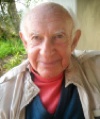
Avrum was Chair of the Department in 1966-1967 and 1969-1972. In an earlier post, I wrote of the early years, including his organizing of a conference in 1964 which brought Herbert Marcuse to UCSD for a campus-wide lecture, which led to the hiring of Marcuse that same year.

Avrum was an extremely prolific philosopher, whose publishing career spanned over fifty years. He was an expert on analytical philosophy, philosophy of language, and the history of twentieth-century philosophy. He was also the co-author (with Richard Popkin) of four introductory philosophy textbooks, including one of the most widely-read introductions in North America (Philosophy Made Simple).

Select Bibliography:

Popkin, R. and A. Stroll, Philosophy Made Simple (Garden City, NY: Doubleday & Company, 1956).
_Introduction to Philosophy (New York: Holt, Rinehart and Winston, 1961).
_Introductory Readings in Philosophy (New York: Holt, Rinehart and Winston, 1972).
_Skeptical Philosophy for Everyone (Prometheus Books, 2002).

Stroll, A. 'On the first flowering of Frege's reputation', Journal of the History of Philosophy 4 (1966).
_Epistemology: new essays in the theory of knowledge (New York, 1967).
_'Censorship, models, and self-government', Journal of Value Inquiry 1 (1967).
_Moore and Wittgenstein on Certainty (Oxford UP, 1994).
_Surfaces (Minneapolis, Minnesota UP 1998).
_Sketches of Landscapes: philosophy by example (Cambridge, MA, 1998).
_'Proper names, names, and fictive objects', The Journal of Philosophy (1998).
_Twentieth Century Analytic Philosophy (New York, Columbia UP, 2001).
_Informal Philosophy (Lanham, MD, 2009).

Links to some of Avrum's papers are available at philpapers.

Thursday, March 3, 2011

Richard Popkin, Founder of the UCSD Philosophy Department

Richard Popkin was the founding Chair of the Department of Philosophy at UCSD in 1963, and a Professor in the department from 1963-1973.

Dr. R.H. PopkinHe was also the founding editor of the Journal of the History of Philosophy (the first volume of which was published in 1963) and the series International Archives of the History of Ideas.

Volume 198 of the International Archives of the History of Ideas is a Festschrift entitled The Legacies of Richard Popkins (ed. Jeremy Popkin, 2008). An electronic version is available (for those with access). Of special interest is Avrum Stroll's essay "Richard Popkin and Philosophy Made Simple" which discusses an introductory philosophy textbook they wrote together (one of four; on which see here). Jeremy Popkin also provides an account of his father's tenure at UCSD on pages 277-280.

Below I have excerpted from some obituaries that I am using in my research on the history of the department.

Richard Popkin: A philosopher grappling with notions of God and scepticism
By Sarah Hutton, in The Guardian, Saturday 7 May 2005.
The History Of Scepticism (1960) revolutionised the received picture of both the history of philosophy and the history of science, by demonstrating the influence, in the century before Descartes, of ancient Greek sceptical arguments about the impossibility of knowing God and the world.
      In making his case for this central contribution to the development of modern science and philosophy, Popkin gave attention to the intellectual context of the time, especially the role of religious disputes in the take-up of philosophical scepticism deriving from the discipline's Greek founder, Pyhrro. Instead of treating the history of science and philosophy as a series of breakthroughs by canonical figures, Popkin sought to view the thought of the past from within its own framework.
      His history brought him international recognition and was translated into four languages. He expanded his thesis in later editions of the book (most recently in 2003), and in The High Road To Pyrrhonism (1989), which took the story through to David Hume. His interest in the contribution of non-philosophical strands (especially religion) to the history of philosophy led to pioneering studies of the interaction of Jewish and Christian philosophy and theology, and of topics such as kabbalism and millenarianism.
     In his many books, the originality of his approach brought new perspectives, both on little-known figures, such as the French millenarian Isaac la Peyrère and the English bible scholar Joseph Mede, and on major figures, especially Spinoza and Newton. Popkin played a major role in generating interest in Newton's legacy of non-scientific manuscripts. The Newton Project, based at Imperial College, London, and Cambridge, which is currently editing these, owes much to his initiatives.
Richard Popkin, Historian of Philosophy and Skepticism, Dies at 81
By Wolfgang Saxon, New York Times, April 19, 2005.
He expanded the <1960> work to "The History of Scepticism From Savonarola to Bayle," now in its second edition, published by the Oxford University Press in 2003. The author documents an era pivotal to Western thought, an age of doubt as well as faith.
     Besides numerous articles and book chapters, Dr. Popkin wrote and edited 36 books, often in collaboration with others. Among the many still in print are a paperback, "Spinoza," published in England last year, as well as "Third Force in 17th-Century Thought" (1991) and "Skeptical Philosophy for Everyone" (2001), written with Avrum Stoll.
      He was the editor of the Columbia History of Western Philosophy, published by the Columbia University Press in 1999, and "Jewish Christians and Christian Jews: From the Renaissance to the Enlightenment" (1993). Also in print is "Scepticism and Irreligion in the 17th and 18th Centuries" (1993), which he edited with Arjo Vanderjagt.
     Forswearing philosophy for a spell in the 1960's, Dr. Popkin joined the chorus of doubters who prominently disputed the Warren Commission Report on the assassination of President John F. Kennedy. In an article in The New York Review of Books and in a paperback he argued that the commission's single-assassin solution was not just implausible, but also impossible in terms of the commission's evidence.
     The book, "The Second Oswald" (Avon, 1966), promptly came under attack. Eliot Fremont-Smith, in a review in The New York Times, called it "a very hasty book, but fascinating reading."
      At his death, Dr. Popkin was working on a book about Rabbi Isaac of Troki in Lithuania, who composed a polemic against Christianity in the 16th century, and a collection of essays on philosophical skepticism.
UCSD keeps a collection of portraits of Richard Popkin.
See also the Wikipedia entry on Richard Popkin.

Saturday, May 1, 2010

On the founding of the department

Richard Popkin wrote the following article for inclusion in: The Centennial Record of the University of California, 1868-1968.  From it we can establish:

  • The exact date of the founding of the department (July 1, 1963)
  • The founding members: Richard Popkin, Jason Saunders, and Avrum Stroll
  • The next hired members: Paul Henry, Herbert Marcuse, and William Bartley
  • The beginnings of the graduate program in 1963-1964 (9 students); the fist Ph. D. candidacy (1965) and first graduate degree awarded (M.A. in June 1965) 
  •  The beginnings of the undergraduate program in 1963-1964
  • The early emphasis on history of philosophy and social-political philosophy

Philosophy: The Department of Philosophy was formed on July 1, 1963, with the appointment of Professors Richard H. Popkin (chairman), Jason L. Saunders, and Avrum Stroll. In 1964-66, Professors Paul Henry, Herbert Marcuse, Associate Professor William W. Bartley III, and some temporary members were added to the staff.
     Graduate instruction began in the academic year 1963-64 with nine graduate students. In 1964-65, there were 22 graduate students and in 1965-66, there will be more than 40. In January, 1965, the department received authorization for its M.A. and Ph.D. programs. In May, 1965, its first student was advanced to candidacy for the Ph.D. degree and in June, 1965, its first M.A. degree was awarded.
Undergraduate instruction began in 1964- 65, when the first freshman class was admitted. The department, in cooperation with the Department of Literature, offered the freshman humanities course to the entire freshman class (176 students). An elective introductory course was also offered to 16 freshmen in the spring of 1965. In 1965-66, the department will participate in both the freshman and sophomore humanities course in Revelle College, as well as offering elective philosophy courses at the sophomore and junior levels.
     The curriculum at both the undergraduate and graduate level is designed to emphasize the history of philosophy, political and social thought, and the widest possible variety of philosophical approaches. It is hoped thereby to provide students with a solid foundation and to encourage them to do independent, imaginative, mature, and self- critical work in philosophy.
     In its first two years, the department has also sponsored a public symposium on The Relevance of Philosophy Today, a campus-wide symposium on Marxism, a lecture series on Galileo (in conjunction with the Department of Literature), and a departmental col- loquium on Contemporary European Philosophy. The editorial office of the Journal of the History of Philosophy is in the department. The department has also initiated a cooperative graduate program with the Irvine campus.
-RICHARD H. POPKIN

Source: The Centennial Record of the University of California, 1868-1968. A Centennial Publication of the University of California. Compiled and Edited by Verne A. Stadtman and the Centennial Publications Staff. Link to HTML version at the University of California History Digital Archives:
http://sunsite.berkeley.edu/~ucalhist/general_history/campuses/ucsd/departments_p.html#philosophy

Friday, April 30, 2010

Portraits of Herbert Marcuse

The UCSD library collections online have published a set of portraits of Herbert Marcuse taken while he was a professor in the philosophy department at UCSD.

Thursday, April 29, 2010

Avrum Stroll

UPDATE: See now the IN MEMORIUM notice, here.

Avrum received his Ph.D. from UC, Berkeley. He joined the Philosophy Department as a professor in 1963 and became chair in 1965 and 1968. His areas of specialization are philosophy of language, epistemology, history of 20th century analytic philosophy, and Wittgenstein studies. He is the author and co-author of twenty books and about 150 articles. Seven of the books were co-authored with Richard H. Popkin. Avrum's latest publications are "Searle on Knowledge, Certainty and Skepticism" in Searle's Philosophy and Chinese Philosophy: Constructive Engagement, "Philosophy in the Future" in Rescher Studies, and Much Ado About Non-Existence: Fiction and Reference (with A.P. Martinich, University of Texas at Austin). Publications in 2008 include "Richard Popkin and Philosophy Made Simple" in Essays in Honor of Richard Popkin, "Metaphysics Revived" in A Companion to Philosophy, and Moore's Paradox Revisited. Avrum has also written referee reports for Cambridge University Press and for Blackwell Pubishing. He has also written reviews for Mind and for the Internet Publications in Philosophy.

Avrum is currently Emeritus Professor of Philosophy at UCSD.